

Small Molecule Targeted Cancer Therapy Market 2026 Precision Oncology Advancing Therapeutic Innovation
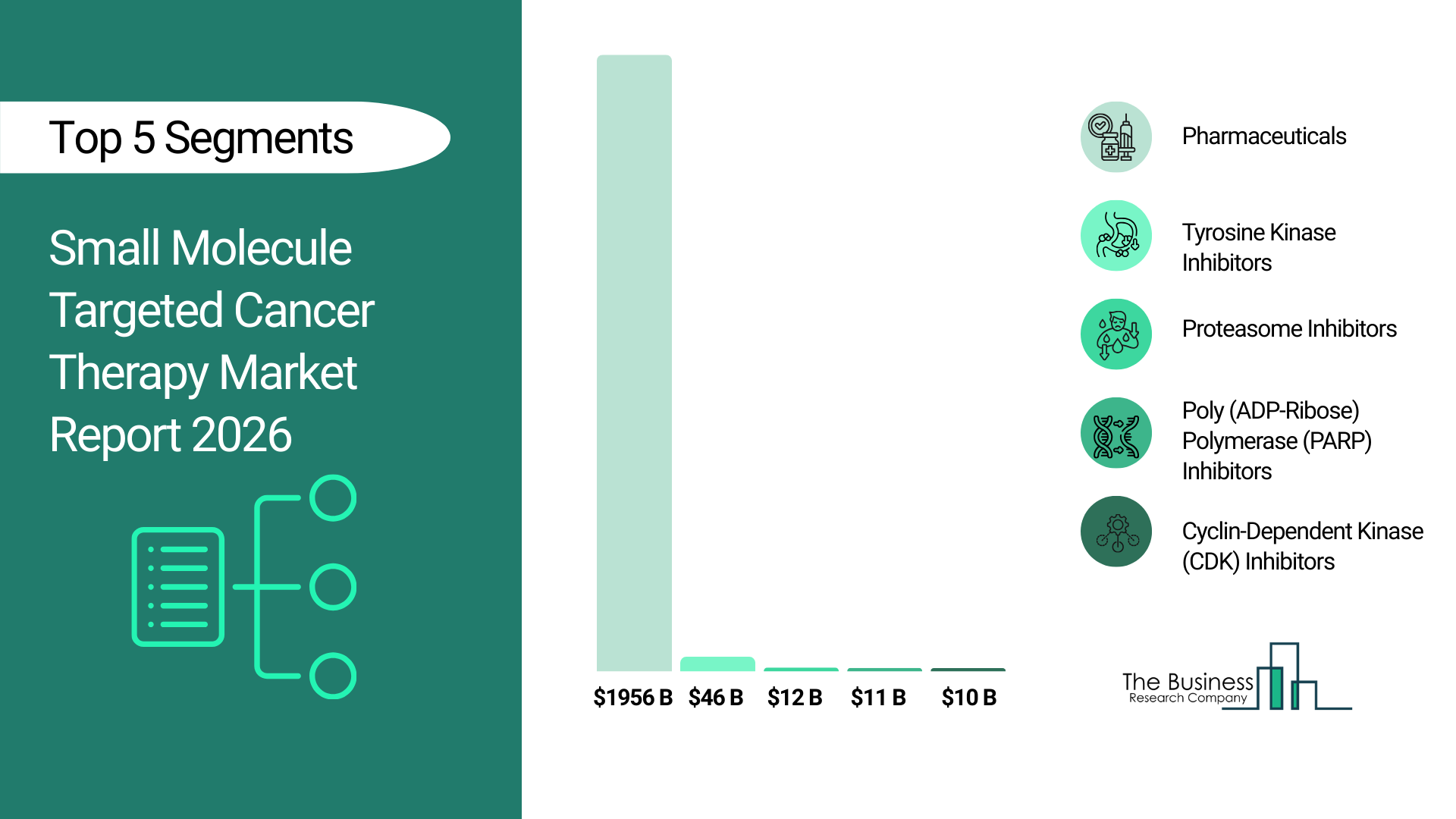
Small Molecule Targeted Cancer Therapy Market Growth
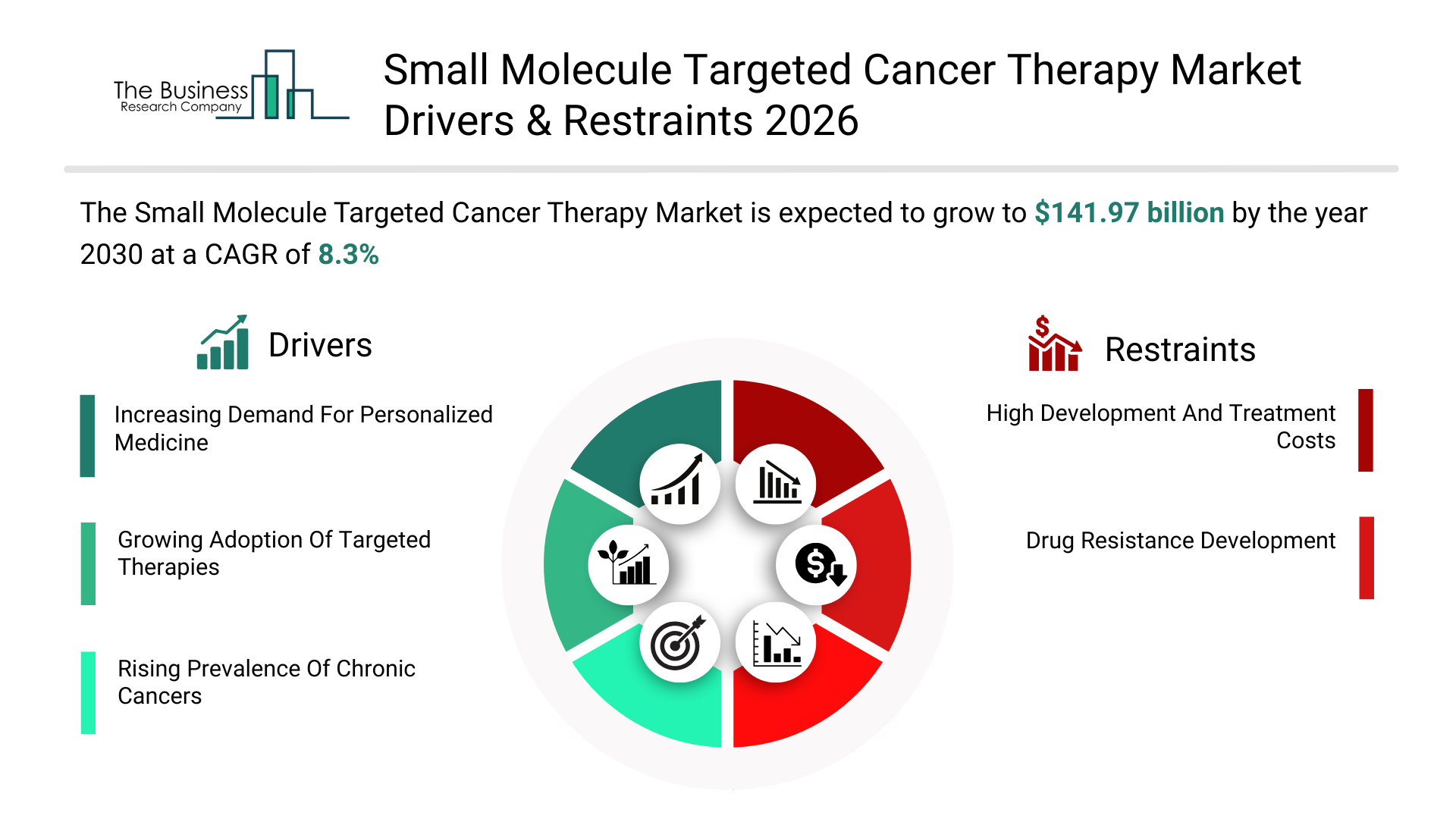
Small Molecule Targeted Cancer Therapy Market Trends
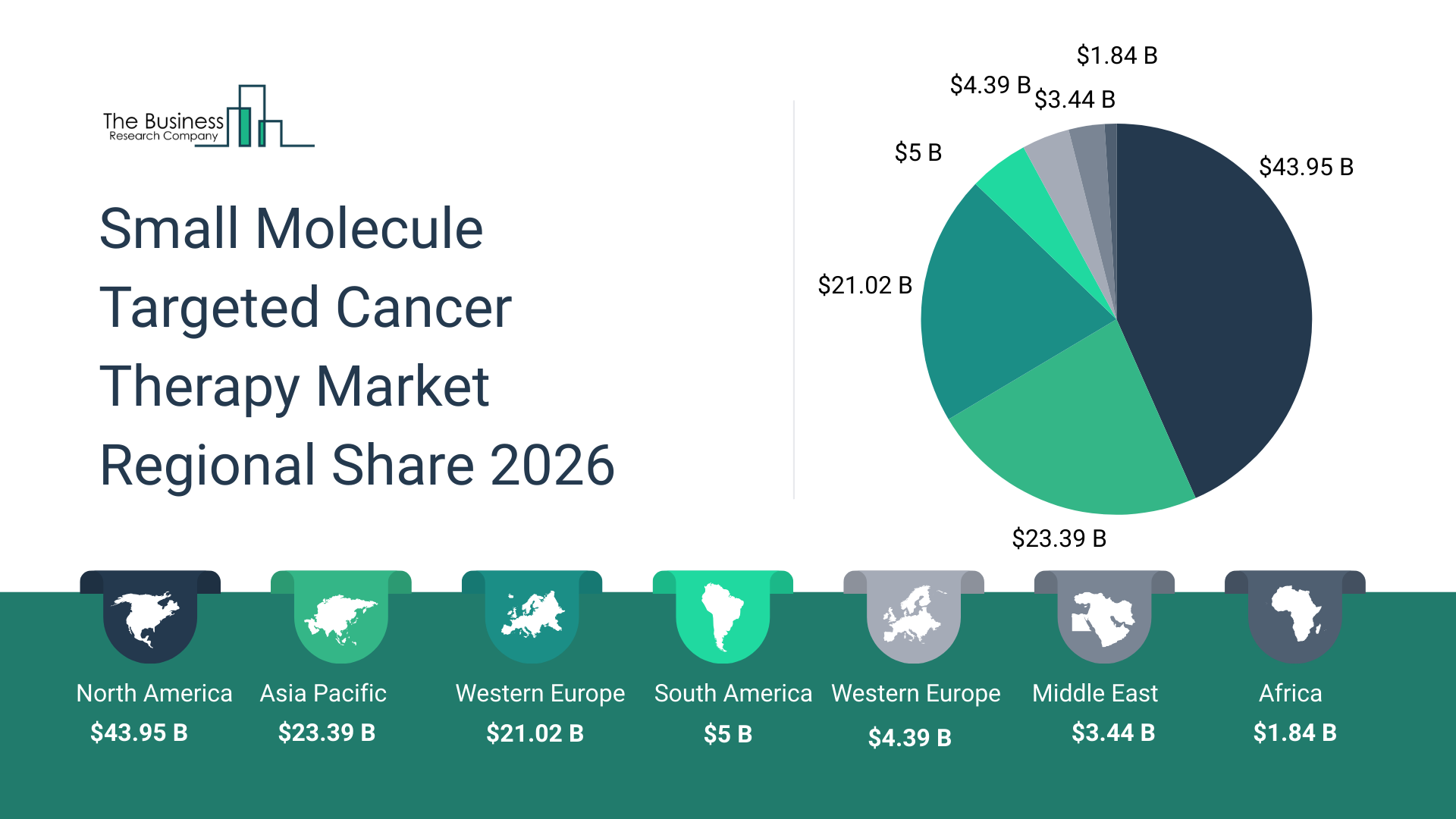
Small Molecule Targeted Cancer Therapy Market Size
The Business Research Company’s Small Molecule Targeted Cancer Therapy Global Market Report 2026 - Market Size, Trends, And Global Forecast 2026-2035
LONDON, GREATER LONDON, UNITED KINGDOM, March 17, 2026 /EINPresswire.com/ -- Small molecule targeted cancer therapy market to surpass $142 billion in 2030. Within the broader Pharmaceuticals industry, which is expected to be $2,513 billion by 2030, the Small Molecule Targeted Cancer Therapy market is estimated to account for nearly 6% of the total market value.
Which Will Be The Biggest Region In The Small Molecule Targeted Cancer Therapy Market in 2030
North America will be the largest region in the small molecule targeted cancer therapy market in 2030, valued at $61 billion. The market is expected to grow from $41 billion in 2025 at a compound annual growth rate (CAGR) of 8%. The strong growth can be attributed to substantial National Cancer Institute (NCI) and federal research funding, a robust pharmaceutical and biotechnology industry with extensive oncology pipelines, advanced clinical trial infrastructure, a strong presence of leading academic and research institutions, and increasing adoption of precision medicine and AI-enabled drug discovery platforms across the United States and Canada.
Which Will Be The Largest Country In The Global Small Molecule Targeted Cancer Therapy Market In 2030?
The USA will be the largest country in the Small Molecule Targeted Cancer Therapy market in 2030, valued at $55 billion. The market is expected to grow from $37 billion in 2025 at a compound annual growth rate (CAGR) of 8%. The strong growth can be attributed to expanding oncology-focused pharmaceutical and biotechnology R&D activities, increasing federal and private funding for cancer research, rapid adoption of precision medicine and biomarker-driven therapies, growth in clinical trials for novel small molecule inhibitors, and continuous advancements in drug discovery platforms and targeted therapy technologies across the country.
Request A Free Sample Of The Small Molecule Targeted Cancer Therapy Market Report
https://www.thebusinessresearchcompany.com/sample_request?id=28331&type=smp&utm_source=EINPresswire&utm_medium=Paid&utm_campaign=Mar_PR
What Will Be The Largest Segment In The Small Molecule Targeted Cancer Therapy Market In 2030?
The small molecule targeted cancer therapy market is segmented by therapy type into tyrosine kinase inhibitors, proteasome inhibitors, histone deacetylase inhibitors, poly (ADP-Ribose) polymerase (PARP) inhibitors, cyclin-dependent kinase (CDK) inhibitors, b-cell lymphoma 2 (BCL-2) inhibitors, mechanistic (Or Mammalian) target of rapamycin (mTOR) inhibitors, and other therapy types. The tyrosine kinase inhibitors market will be the largest segment of the small molecule targeted cancer therapy market segmented by therapy type, accounting for 45% or $64 billion of the total in 2030. The tyrosine kinase inhibitors market will be supported by the increasing prevalence of targeted therapies in oncology, strong R&D pipelines for kinase inhibitors, rising adoption of precision medicine and biomarker-driven treatment approaches, expanding clinical trials for solid and hematologic cancers, continuous technological advancements in drug design and molecular targeting, and growing collaborations between pharmaceutical companies and academic research centers.The small molecule targeted cancer therapy market is segmented by mode of administration into oral, intravenous, and other modes of administration.The small molecule targeted cancer therapy market is segmented by distribution channel into hospital pharmacies, retail pharmacies, and online pharmacies.The small molecule targeted cancer therapy market is segmented by application into lung cancer, breast cancer, colorectal cancer, prostate cancer, melanoma, ovarian cancer, blood cancer (Leukemia, Lymphoma), other applications.The small molecule targeted cancer therapy market is segmented by end user into hospitals, specialty clinics, research institutes, and other end users.
The small molecule targeted cancer therapy market is segmented by mode of administration into oral, intravenous, and other modes of administration.
The small molecule targeted cancer therapy market is segmented by distribution channel into hospital pharmacies, retail pharmacies, and online pharmacies.
The small molecule targeted cancer therapy market is segmented by application into lung cancer, breast cancer, colorectal cancer, prostate cancer, melanoma, ovarian cancer, blood cancer (Leukemia, Lymphoma), other applications.
The small molecule targeted cancer therapy market is segmented by end user into hospitals, specialty clinics, research institutes, and other end users.
What Is The Expected CAGR For The Small Molecule Targeted Cancer Therapy Market Leading Up To 2030?
The expected CAGR for the small molecule targeted cancer therapy market leading up to 2030 is 8%.
What Will Be The Growth Driving Factors In The Global Small Molecule Targeted Cancer Therapy Market In The Forecast Period?
The rapid growth of the global small molecule targeted cancer therapy market leading up to 2030 will be driven by the following key factors that are expected to reshape precision oncology approaches, drug development pipelines, clinical treatment strategies, regulatory frameworks, and innovation across global healthcare and pharmaceutical ecosystems.
Increasing Demand For Personalized Medicine - The increasing demand for personalized medicine is expected to become a key growth driver for the small molecule targeted cancer therapy market by 2030. The increasing demand for personalized medicine drives the growth of small molecule targeted cancer therapy by enabling treatments tailored to individual genetic profiles and tumor characteristics. These therapies precisely target molecular pathways involved in cancer progression, improving treatment effectiveness and reducing side effects. Personalized approaches help identify patients most likely to benefit from specific inhibitors, enhancing clinical outcomes. Advancements in molecular diagnostics further support this trend by facilitating accurate target identification. As a result, healthcare systems are increasingly adopting targeted small molecule drugs as a cornerstone of precision oncology. As a result, the increasing demand for personalized medicine is anticipated to contributing to 2.0% annual growth in the market.
Growing Adoption Of Targeted Therapies - The growing adoption of targeted therapies is expected to emerge as a major factor driving the expansion of the small molecule targeted cancer therapy market by 2030. The growing adoption of targeted therapies is a significant driver of the small molecule targeted cancer therapy market. As healthcare systems increasingly shift toward precision medicine, there is a rising preference for treatments that specifically target cancer-related molecular pathways rather than affecting healthy cells. Small molecule targeted therapies provide improved treatment outcomes, lower toxicity, and greater patient tolerance compared to conventional chemotherapy. This growing acceptance among clinicians and patients alike is accelerating research, development, and commercialization of innovative small molecule drugs. Consequently, the expanding use of targeted therapies is propelling overall market growth by enhancing demand for advanced, personalized cancer treatment solutions. Consequently, the growing adoption of targeted therapies is projected to contribute to around 1.7% annual growth in the market.
Rising Prevalence Of Chronic Cancers - The rising prevalence of chronic cancers is expected to act as a key growth catalyst for the small molecule targeted cancer therapy market by 2030. The rising prevalence of chronic cancers is a major driver for the small molecule targeted cancer therapy market, as it increases the demand for more effective and long-term treatment options. Traditional chemotherapy often causes severe side effects and limited efficacy in chronic cases, leading to a shift toward targeted therapies. Small molecule drugs offer precision in attacking specific cancer-causing proteins, improving patient outcomes and quality of life. The growing number of patients with recurring or persistent cancers fuels continuous research and drug development. Consequently, healthcare providers are increasingly adopting these therapies to manage cancer as a chronic condition. Therefore, the rising prevalence of chronic cancers is projected to contribute to approximately 1.5% annual growth in the market.
Access The Detailed Small Molecule Targeted Cancer Therapy Market Report Here
https://www.thebusinessresearchcompany.com/report/small-molecule-targeted-cancer-therapy-global-market-report?utm_source=EINPresswire&utm_medium=Paid&utm_campaign=Mar_PR
What Are The Key Growth Opportunities In The Small Molecule Targeted Cancer Therapy Market In 2030?
The most significant growth opportunities are anticipated in the tyrosine kinase inhibitors market, the proteasome inhibitors market, the histone deacetylase inhibitors market, the poly (ADP-Ribose) polymerase (PARP) inhibitors market, the cyclin-dependent kinase (CDK) inhibitors market, the b-cell lymphoma 2 (BCL-2) inhibitors market, the and mechanistic (Or Mammalian) target of rapamycin (mTOR) inhibitors market, and the other therapy types market. Collectively, these segments are projected to contribute over $48 billion in market value by 2030, driven by increasing investments in oncology drug discovery and development, rapid adoption of precision and personalized medicine approaches, expansion of clinical trials for targeted therapies, advancements in molecular targeting and inhibitor design technologies, growing collaborations between pharmaceutical companies and research institutions, and rising demand for effective and safer cancer treatments across diverse patient populations.
The tyrosine kinase inhibitors market is projected to grow by $21 billion, proteasome inhibitors market by $5 billion, the histone deacetylase inhibitors market by $4 billion, the poly (ADP-Ribose) polymerase (PARP) inhibitors market by $6 billion, the cyclin-dependent kinase (CDK) inhibitors market by $5 billion, the b-cell lymphoma 2 (BCL-2) inhibitors market by $3 billion, the mechanistic (Or Mammalian) target of rapamycin (mTOR) inhibitors market by $2 billion, and the other therapy types market by $2 billion over the next five years from 2025 to 2030.
Learn More About The Business Research Company
The Business Research Company (www.thebusinessresearchcompany.com) is a leading market intelligence firm renowned for its expertise in company, market, and consumer research. We have published over 17,500 reports across 27 industries and 60+ geographies. Our research is powered by 1,500,000 datasets, extensive secondary research, and exclusive insights from interviews with industry leaders.
We provide continuous and custom research services, offering a range of specialized packages tailored to your needs, including Market Entry Research Package, Competitor Tracking Package, Supplier & Distributor Package and much more.
Disclaimer: Please note that the findings, conclusions and recommendations that TBRC Business Research Pvt Ltd delivers are based on information gathered in good faith from both primary and secondary sources, whose accuracy we are not always in a position to guarantee. As such TBRC Business Research Pvt Ltd can accept no liability whatever for actions taken based on any information that may subsequently prove to be incorrect. Analysis and findings included in TBRC reports and presentations are our estimates, opinions and are not intended as statements of fact or investment guidance.
Contact Us:
The Business Research Company
Americas +1 310-496-7795
Europe +44 7882 955267
Asia & Others +44 7882 955267 & +91 8897263534
Email: info@tbrc.info
Follow Us On:
LinkedIn: https://in.linkedin.com/company/the-business-research-company
Oliver Guirdham
The Business Research Company
+44 7882 955267
info@tbrc.info
Visit us on social media:
LinkedIn
Facebook
X
Legal Disclaimer:
EIN Presswire provides this news content "as is" without warranty of any kind. We do not accept any responsibility or liability for the accuracy, content, images, videos, licenses, completeness, legality, or reliability of the information contained in this article. If you have any complaints or copyright issues related to this article, kindly contact the author above.
