

The top news stories from Europe
Provided by AGP
Paper Bag Manufacturing Plant Setup, Feasibility Study, ROI Analysis and Business Plan Consultant
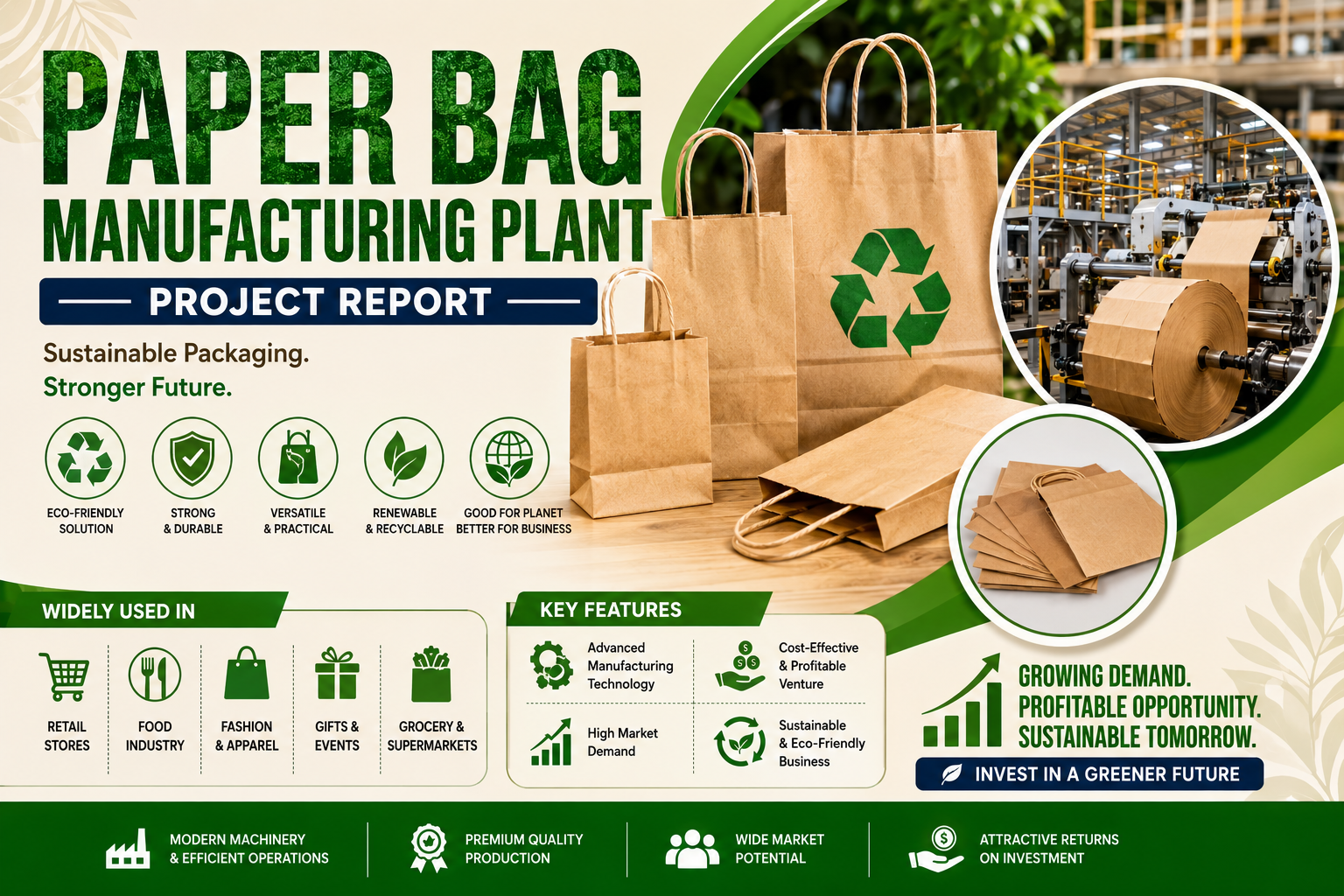
Paper Bag Manufacturing Plant
A Detailed DPR Covering CapEx, OpEx, Process Design, ROI, and the Global Opportunity in Kraft Paper, Sustainable Packaging, and Eco-Friendly Bag Manufacturing
BROOKLYN, NY, UNITED STATES, May 19, 2026 /EINPresswire.com/ -- Setting up a paper bag manufacturing plant is one of the few manufacturing investments where government regulation works as a permanent demand generator. Plastic bag bans are now active across the European Union, India, the US, and over 60 countries globally, compelling every retailer, restaurant, grocery chain, and e-commerce operator to replace plastic with paper alternatives. That is not cyclical demand - it is structural, policy-driven, and it grows every time a new ban is enacted or an existing one is tightened. Add to that the brand shift toward sustainable packaging, growing consumer preference for eco-friendly alternatives, and the rapid expansion of quick-commerce and food delivery, and the demand picture for a kraft paper bag manufacturing plant is as clear as it gets.IMARC Group’s Paper Bag Manufacturing Plant Project Report is a complete DPR and paper bag manufacturing feasibility study for entrepreneurs, investors, and project developers entering this space. It covers everything from machinery specifications and raw material sourcing to 10-year financial projections, process design, and regulatory compliance - the kind of detail you need when presenting to a bank, a private investor, or your own management team.
𝐑𝐞𝐪𝐮𝐞𝐬𝐭 𝐟𝐨𝐫 𝐚 𝐒𝐚𝐦𝐩𝐥𝐞 𝐑𝐞𝐩𝐨𝐫𝐭: https://www.imarcgroup.com/paper-bag-manufacturing-plant-project-report/requestsample
𝗜𝗻𝘃𝗲𝘀𝘁𝗺𝗲𝗻𝘁 𝗗𝗿𝗶𝘃𝗲𝗿𝘀 𝗮𝗻𝗱 𝗠𝗮𝗿𝗸𝗲𝘁 𝗢𝗽𝗽𝗼𝗿𝘁𝘂𝗻𝗶𝘁𝘆
Three forces are making this the right time to enter paper bag manufacturing:
𝗣𝗹𝗮𝘀𝘁𝗶𝗰 𝗯𝗮𝗻𝘀 𝗰𝗿𝗲𝗮𝘁𝗶𝗻𝗴 𝗻𝗼𝗻-𝗻𝗲𝗴𝗼𝘁𝗶𝗮𝗯𝗹𝗲 𝗱𝗲𝗺𝗮𝗻𝗱: Over 60 countries have enacted single-use plastic restrictions, and the list grows every year. The EU Single-Use Plastics Directive bans plastic carrier bags across all member states. India banned single-use plastics under 75 microns in June 2022, directly mandating the switch to paper alternatives across 14 million-plus retail outlets, restaurants, and hospitality businesses. US state-level bans in California, New York, and dozens of others have the same effect. Each new ban creates a new captive buyer base for paper bag manufacturers overnight.
𝗘-𝗰𝗼𝗺𝗺𝗲𝗿𝗰𝗲 𝗮𝗻𝗱 𝗳𝗼𝗼𝗱 𝗱𝗲𝗹𝗶𝘃𝗲𝗿𝘆 𝗺𝘂𝗹𝘁𝗶𝗽𝗹𝘆𝗶𝗻𝗴 𝘃𝗼𝗹𝘂𝗺𝗲𝘀: Online retail and quick-commerce have structurally increased packaging consumption. Every order shipped or delivered needs a bag. Platforms like Amazon, Flipkart, Zepto, and Zomato are actively transitioning to kraft paper bag packaging to meet corporate ESG commitments and comply with extended producer responsibility rules. Food delivery alone - growing at double-digit rates across Asia, Europe, and North America - is adding consistent, high-frequency paper bag demand that did not exist a decade ago.
𝗕𝗿𝗮𝗻𝗱𝘀 𝗺𝗮𝗸𝗶𝗻𝗴 𝘀𝘂𝘀𝘁𝗮𝗶𝗻𝗮𝗯𝗶𝗹𝗶𝘁𝘆 𝗮 𝗽𝗿𝗼𝗱𝘂𝗰𝘁 𝗳𝗲𝗮𝘁𝘂𝗿𝗲: Premium retail, luxury goods, and fast food chains now use paper bag design as a brand statement. Customised, printed kraft bags carry logos, messaging, and seasonal designs that reinforce brand identity. This premiumisation of paper bag packaging upgrades the average selling price and improves margins for manufacturers with printing capability. A sustainable packaging plant setup that includes flexographic or digital printing can serve both the high-volume economy segment and the premium branded segment from the same facility.
𝗣𝗮𝗽𝗲𝗿 𝗕𝗮𝗴 𝗧𝘆𝗽𝗲𝘀 𝗮𝗻𝗱 𝗣𝗿𝗼𝗱𝘂𝗰𝘁 𝗥𝗮𝗻𝗴𝗲
A paper bag manufacturing unit’s product mix determines its end markets and margin profile. Main bag categories:
• 𝗙𝗹𝗮𝘁 𝗯𝗮𝗴𝘀: The simplest construction - two panels joined at sides and bottom. Used in bakeries, pharmacies, fast food counters, and retail gifting. Low tooling cost, high-speed production. Entry-level product for new facilities building volume.
• 𝗚𝘂𝘀𝘀𝗲𝘁𝗲𝗱 𝗯𝗮𝗴𝘀: Side or bottom gussets allow the bag to expand for bulkier items. Standard product for grocery, grain, and flour packaging. A brown kraft paper bag manufacturing operation focused on grocery supply typically starts here.
• 𝗦𝗾𝘂𝗮𝗿𝗲-𝗯𝗼𝘁𝘁𝗼𝗺 (𝗦𝗢𝗦) 𝗯𝗮𝗴𝘀: Self-opening square bottom allows the bag to stand independently. Used across grocery, retail checkout, and takeaway food. The largest volume segment in most markets. Handles can be added for premium versions.
• 𝗛𝗮𝗻𝗱𝗹𝗲𝗱 𝘀𝗵𝗼𝗽𝗽𝗶𝗻𝗴 𝗯𝗮𝗴𝘀: Twisted paper, flat ribbon, or rope handles. Premium retail,
apparel, and gifting. Higher raw material cost but better per-unit realisation. Eco-friendly paper bag manufacturing for branded retail concentrates in this segment.
• 𝗠𝘂𝗹𝘁𝗶𝘄𝗮𝗹𝗹 𝗸𝗿𝗮𝗳𝘁 𝗯𝗮𝗴𝘀: Two to five layers of kraft paper for industrial applications - cement, chemicals, fertiliser, animal feed, and construction materials. Much larger format, heavier paper grades, but stable high-volume offtake from industrial buyers on long-term contracts.
𝗣𝗮𝗽𝗲𝗿 𝗕𝗮𝗴 𝗠𝗮𝗻𝘂𝗳𝗮𝗰𝘁𝘂𝗿𝗶𝗻𝗴 𝗣𝗹𝗮𝗻𝘁 𝗙𝗲𝗮𝘀𝗶𝗯𝗶𝗹𝗶𝘁𝘆 𝗥𝗲𝗽𝗼𝗿𝘁: https://www.imarcgroup.com/paper-bag-manufacturing-plant-project-report
𝗛𝗼𝘄 𝗮 𝗣𝗮𝗽𝗲𝗿 𝗕𝗮𝗴 𝗠𝗮𝗻𝘂𝗳𝗮𝗰𝘁𝘂𝗿𝗶𝗻𝗴 𝗣𝗹𝗮𝗻𝘁 𝗪𝗼𝗿𝗸𝘀 - 𝗧𝗵𝗲 𝗣𝗿𝗼𝗱𝘂𝗰𝘁𝗶𝗼𝗻 𝗣𝗿𝗼𝗰𝗲𝘀𝘀
A paper bag production plant follows a well-defined mechanical sequence. The process is less complex than most packaging operations, which is part of what makes entry barriers manageable for new investors:
• 𝗣𝗮𝗽𝗲𝗿 𝗿𝗼𝗹𝗹 𝗳𝗲𝗲𝗱𝗶𝗻𝗴 𝗮𝗻𝗱 𝘂𝗻𝘄𝗶𝗻𝗱𝗶𝗻𝗴: Kraft paper rolls - typically 50-150 gsm depending on bag grade - are loaded onto the machine. Roll diameter, paper width, and basis weight are set based on the order specification. Brown kraft dominates for economy bags; white kraft or coated stock for premium and printed applications
• 𝗣𝗿𝗶𝗻𝘁𝗶𝗻𝗴 (𝗶𝗻𝗹𝗶𝗻𝗲 𝗼𝗿 𝘀𝗲𝗽𝗮𝗿𝗮𝘁𝗲): Flexographic or gravure printing applies brand logos, product information, or decorative designs onto the paper web before bag forming. Inline printing improves throughput; standalone printing offers more colour flexibility for short runs
• 𝗖𝘂𝘁𝘁𝗶𝗻𝗴 𝗮𝗻𝗱 𝘀𝗶𝘇𝗶𝗻𝗴: The printed or unprinted web is cut to the correct panel dimensions. Cutting blade configuration determines bag size. Servo-controlled systems allow fast changeover between different bag sizes
• 𝗙𝗼𝗹𝗱𝗶𝗻𝗴 𝗮𝗻𝗱 𝗴𝗹𝘂𝗶𝗻𝗴: Paper panels are folded along pre-scored lines and hot-melt or water-based adhesive is applied at seam points. Glue application precision directly affects bag strength - under-application causes delamination; over-application wastes material and slows line speed
• 𝗕𝗼𝘁𝘁𝗼𝗺 𝗳𝗼𝗿𝗺𝗮𝘁𝗶𝗼𝗻: For square-bottom bags, the bottom panel is opened, folded, and glued to form a stable base. This step defines the final bag shape and load-bearing capacity
• 𝗛𝗮𝗻𝗱𝗹𝗲 𝗮𝘁𝘁𝗮𝗰𝗵𝗺𝗲𝗻𝘁: For handled bags, twisted paper, flat ribbon, or rope handles are inserted and glued or stitched into the bag top. Handle attachment is typically a separate station or offline process for smaller operations
• 𝗤𝘂𝗮𝗹𝗶𝘁𝘆 𝗶𝗻𝘀𝗽𝗲𝗰𝘁𝗶𝗼𝗻 𝗮𝗻𝗱 𝗰𝗼𝘂𝗻𝘁𝗶𝗻𝗴: Finished bags are inspected for dimensional accuracy, print quality, and seam integrity. Automatic counters stack and batch bags for packaging
• 𝗣𝗮𝗰𝗸𝗶𝗻𝗴 𝗮𝗻𝗱 𝗱𝗶𝘀𝗽𝗮𝘁𝗰𝗵: Bags are bundled, boxed, or baled depending on customer requirement. Customised packing per retail or industrial buyer specification is common
𝗣𝗹𝗮𝗻𝘁 𝗜𝗻𝘃𝗲𝘀𝘁𝗺𝗲𝗻𝘁 𝗘𝗰𝗼𝗻𝗼𝗺𝗶𝗰𝘀
𝗣𝗿𝗼𝗱𝘂𝗰𝘁𝗶𝗼𝗻 𝗖𝗮𝗽𝗮𝗰𝗶𝘁𝘆:
• Annual production capacity: 50–100 million pieces
• Modular line configuration allows starting with standard bag types and adding handle attachment or printing capability as the customer base grows
𝗣𝗿𝗼𝗳𝗶𝘁𝗮𝗯𝗶𝗹𝗶𝘁𝘆 𝗕𝗲𝗻𝗰𝗵𝗺𝗮𝗿𝗸𝘀:
• Gross Profit: 25–35%
• Net Profit: 10–15% after financing costs, depreciation, and taxes
𝗢𝗽𝗲𝗿𝗮𝘁𝗶𝗻𝗴 𝗖𝗼𝘀𝘁 (𝗢𝗽𝗘𝘅) 𝗕𝗿𝗲𝗮𝗸𝗱𝗼𝘄𝗻:
• Raw Materials: 70–80% of total OpEx. Kraft paper is the primary cost driver
• Utilities: 5–10% of OpEx
𝗣𝗮𝗽𝗲𝗿 𝗕𝗮𝗴 𝗣𝗹𝗮𝗻𝘁 𝗖𝗮𝗽𝗘𝘅 𝗖𝗼𝗺𝗽𝗼𝗻𝗲𝗻𝘁𝘀:
• Land and factory construction
• Core machinery: paper bag making machines (flat, gusseted, SOS), handle attachment units, inline printing units
• Auxiliary equipment: paper roll handling systems, automatic counting and stacking units, baling or boxing lines
• Utilities: power supply, compressed air system
• Pre-operative costs, machine trials, customer sample approvals, and initial working capital
𝗚𝗹𝗼𝗯𝗮𝗹 𝗠𝗮𝗿𝗸𝗲𝘁 𝗮𝗻𝗱 𝗥𝗲𝗴𝗶𝗼𝗻𝗮𝗹 𝗗𝗲𝗺𝗮𝗻𝗱:
The global paper bag market, valued at USD 6.24 billion in 2025, is projected to reach USD 8.88 billion by 2034 at a CAGR of 4.0%. Retail leads end-use demand with the largest share, driven by high-volume carryout requirements. Kraft paper accounts for the dominant material share due to its strength, recyclability, and compatibility with both printed and unprinted formats.
𝗜𝗻𝗱𝗶𝗮: The India paper bags market size was valued at USD 791.65 million in 2025 and is projected to reach USD 1,130.84 million by 2034, growing at a CAGR of 4.04% from 2026 to 2034. India’s nationwide ban on single-use plastics below 75 microns, enacted in June 2022, created overnight demand across 14 million retail outlets and the entire food service sector. Brown kraft dominates with 68% market share. North India leads with 30% of national consumption, driven by Delhi NCR regulatory enforcement and dense retail activity. The PMEGP scheme provides financial incentives for new kraft paper bag manufacturing plant setup.
𝗘𝘂𝗿𝗼𝗽𝗲𝗮𝗻 𝗨𝗻𝗶𝗼𝗻: The EU Single-Use Plastics Directive is the most comprehensive plastic packaging regulation globally. Germany, France, the UK, and the Netherlands lead paper bag consumption. The European market is shifting toward premium formats - recycled-content paper, certified sustainable sourcing, and branded designs. In July 2025, THC acquired Polish paper bag manufacturer Promar, signalling active consolidation and capacity investment in Central Europe.
𝗨𝗻𝗶𝘁𝗲𝗱 𝗦𝘁𝗮𝘁𝗲𝘀: State-level plastic bag bans in California, New York, Hawaii, and over a dozen other states have structurally redirected demand to paper alternatives. E-commerce fulfillment and grocery checkout are the primary volume channels. Retail chains and fast food operators are the anchor customers for paper bag production plant operators in the US.
𝗖𝗵𝗶𝗻𝗮 𝗮𝗻𝗱 𝗦𝗼𝘂𝘁𝗵𝗲𝗮𝘀𝘁 𝗔𝘀𝗶𝗮: China’s domestic plastic restrictions and its dominance in export manufacturing make it both a large consumer and producer of paper bags. Vietnam, Indonesia, and Thailand are emerging as production hubs serving regional retail and food delivery growth.
𝗠𝗶𝗱𝗱𝗹𝗲 𝗘𝗮𝘀𝘁 𝗮𝗻𝗱 𝗔𝗳𝗿𝗶𝗰𝗮: Saudi Arabia, UAE, and South Africa are all implementing or tightening single-use plastic restrictions. The food service and hospitality sector in the Gulf region is a strong buyer of premium handled paper bags. Africa’s rapidly urbanising retail sector is creating a growing addressable market for basic SOS and gusseted bags.
𝗦𝗶𝘁𝗲 𝗦𝗲𝗹𝗲𝗰𝘁𝗶𝗼𝗻 𝗮𝗻𝗱 𝗣𝗼𝗹𝗶𝗰𝘆 𝗦𝘂𝗽𝗽𝗼𝗿𝘁:
Location decisions for a paper bag manufacturing plant setup directly affect raw material cost, buyer access, and compliance requirements:
• 𝗣𝗿𝗼𝘅𝗶𝗺𝗶𝘁𝘆 𝘁𝗼 𝗽𝗮𝗽𝗲𝗿 𝗺𝗶𝗹𝗹𝘀 𝗼𝗿 𝗽𝗮𝗽𝗲𝗿 𝗱𝗶𝘀𝘁𝗿𝗶𝗯𝘂𝘁𝗼𝗿𝘀: Kraft paper typically accounts for 70–75% of total production cost. Reducing inbound logistics on paper rolls is the single most impactful site decision. In India, proximity to paper mills in Andhra Pradesh, Maharashtra, Madhya Pradesh, or West Bengal significantly reduces raw material cost
• 𝗔𝗰𝗰𝗲𝘀𝘀 𝘁𝗼 𝗿𝗲𝘁𝗮𝗶𝗹 𝗮𝗻𝗱 𝗳𝗼𝗼𝗱 𝘀𝗲𝗿𝘃𝗶𝗰𝗲 𝗯𝘂𝘆𝗲𝗿𝘀: Paper bag customers - supermarket chains, quick-service restaurants, e-commerce fulfilment centres, and corporate gifting companies - typically prefer local suppliers for faster delivery and customisation turnaround. Proximity to major retail or commercial hubs increases win rates on printing and branded bag contracts
• 𝗥𝗲𝗴𝘂𝗹𝗮𝘁𝗼𝗿𝘆 𝗰𝗼𝗺𝗽𝗹𝗶𝗮𝗻𝗰𝗲: In India, Bureau of Indian Standards (BIS) and State Pollution Control Board registration are required. In the EU, compliance with the Single-Use Plastics Directive and FSC/PEFC paper certification preferred by buyers. In the US, R2 certification and state-specific packaging regulations apply
• 𝗚𝗼𝘃𝗲𝗿𝗻𝗺𝗲𝗻𝘁 𝘀𝘂𝗽𝗽𝗼𝗿𝘁 𝗽𝗿𝗼𝗴𝗿𝗮𝗺𝗺𝗲𝘀: India - PMEGP scheme provides subsidies up to 25–35% of project cost for eco-friendly paper bag manufacturing units, particularly for MSMEs. Additional support under Atmanirbhar Bharat packaging sector schemes. EU - state-level grants for sustainable packaging manufacturers. US - SBA loans and state enterprise zone incentives for green manufacturing
• 𝗣𝗿𝗶𝗻𝘁𝗶𝗻𝗴 𝗰𝗮𝗽𝗮𝗯𝗶𝗹𝗶𝘁𝘆 𝗮𝘀 𝗮 𝗰𝗼𝗺𝗽𝗲𝘁𝗶𝘁𝗶𝘃𝗲 𝗱𝗶𝗳𝗳𝗲𝗿𝗲𝗻𝘁𝗶𝗮𝘁𝗼𝗿: Facilities with flexographic inline printing can serve branded retail and food service customers who pay a significant premium. Printing investment is recoverable quickly given the price differential between plain and branded bags
𝗥𝗲𝗽𝗼𝗿𝘁 𝗖𝗼𝘃𝗲𝗿𝗮𝗴𝗲
IMARC Group’s Paper Bag Plant Project Report is a complete paper bag manufacturing business plan and technical reference for investment decisions, bank financing, and pre-project engineering:
• Full process flow with mass balance covering all stages from paper roll feeding through cutting, folding, gluing, handle attachment, printing, inspection, and dispatch
• Paper bag plant CapEx breakdown: bag making machines, printing units, handle attachment systems, auxiliary equipment, and civil construction
• 10-year OpEx projections: kraft paper procurement, adhesives, inks, utilities, manpower, maintenance
• Financial model: paper bag plant ROI, IRR, NPV, DSCR, break-even, and sensitivity tables across kraft paper price scenarios
• Machinery specifications with sourcing options across Indian, Chinese, European, and Taiwanese equipment suppliers
• Product mix strategy: economy SOS and gusseted bags versus premium printed handled bags - margin and market access comparison
• Kraft paper bag plant setup cost benchmarking across different capacity configurations and automation levels
• Regulatory compliance and certification framework for India, EU, US, and Middle Eastern markets
The report is relevant for entrepreneurs evaluating a new paper bag plant investment, packaging companies evaluating capacity expansion, private equity funds assessing sustainable packaging investments, MSME operators accessing PMEGP financing, and banks requiring a bankable paper bag manufacturing feasibility study for project financing - across any geography.
𝐁𝐫𝐨𝐰𝐬𝐞 𝐌𝐨𝐫𝐞 𝐅𝐞𝐚𝐬𝐢𝐛𝐢𝐥𝐢𝐭𝐲 𝐒𝐭𝐮𝐝𝐲 𝐚𝐧𝐝 𝐁𝐮𝐬𝐢𝐧𝐞𝐬𝐬 𝐏𝐥𝐚𝐧 𝐑𝐞𝐩𝐨𝐫𝐭𝐬 𝐛𝐲 𝐈𝐌𝐀𝐑𝐂 𝐆𝐫𝐨𝐮𝐩:
• 𝐑𝐚𝐢𝐥𝐰𝐚𝐲 𝐖𝐚𝐠𝐨𝐧 𝐌𝐚𝐧𝐮𝐟𝐚𝐜𝐭𝐮𝐫𝐢𝐧𝐠 𝐏𝐥𝐚𝐧𝐭 𝐏𝐫𝐨𝐣𝐞𝐜𝐭 𝐑𝐞𝐩𝐨𝐫𝐭: https://www.imarcgroup.com/railway-wagon-manufacturing-plant-project-report
• 𝐑𝐚𝐩𝐢𝐝 𝐃𝐢𝐚𝐠𝐧𝐨𝐬𝐭𝐢𝐜 𝐓𝐞𝐬𝐭 𝐊𝐢𝐭 𝐌𝐚𝐧𝐮𝐟𝐚𝐜𝐭𝐮𝐫𝐢𝐧𝐠 𝐏𝐥𝐚𝐧𝐭 𝐏𝐫𝐨𝐣𝐞𝐜𝐭 𝐑𝐞𝐩𝐨𝐫𝐭: https://www.imarcgroup.com/rapid-diagnostic-test-kit-manufacturing-plant-project-report
• 𝐑𝐞𝐚𝐝𝐲 𝐌𝐢𝐱 𝐂𝐨𝐧𝐜𝐫𝐞𝐭𝐞 𝐌𝐚𝐧𝐮𝐟𝐚𝐜𝐭𝐮𝐫𝐢𝐧𝐠 𝐏𝐥𝐚𝐧𝐭 𝐏𝐫𝐨𝐣𝐞𝐜𝐭 𝐑𝐞𝐩𝐨𝐫𝐭: https://www.imarcgroup.com/ready-mix-concrete-manufacturing-plant-project-report
• 𝐒𝐢𝐧𝐠𝐥𝐞 𝐒𝐮𝐩𝐞𝐫 𝐏𝐡𝐨𝐬𝐩𝐡𝐚𝐭𝐞 𝐌𝐚𝐧𝐮𝐟𝐚𝐜𝐭𝐮𝐫𝐢𝐧𝐠 𝐏𝐥𝐚𝐧𝐭 𝐏𝐫𝐨𝐣𝐞𝐜𝐭 𝐑𝐞𝐩𝐨𝐫𝐭: https://www.imarcgroup.com/single-super-phosphate-manufacturing-plant-project-report
• 𝐒𝐨𝐥𝐚𝐫 𝐏𝐨𝐰𝐞𝐫 𝐌𝐚𝐧𝐮𝐟𝐚𝐜𝐭𝐮𝐫𝐢𝐧𝐠 𝐏𝐥𝐚𝐧𝐭 𝐏𝐫𝐨𝐣𝐞𝐜𝐭 𝐑𝐞𝐩𝐨𝐫𝐭: https://www.imarcgroup.com/solar-power-plant-manufacturing-plant-project-report
• 𝐒𝐩𝐢𝐜𝐞 𝐏𝐫𝐨𝐜𝐞𝐬𝐬𝐢𝐧𝐠 𝐏𝐥𝐚𝐧𝐭 𝐏𝐫𝐨𝐣𝐞𝐜𝐭 𝐑𝐞𝐩𝐨𝐫𝐭: https://www.imarcgroup.com/spice-processing-plant-project-report
• 𝐓𝐨𝐨𝐭𝐡𝐩𝐚𝐬𝐭𝐞 𝐌𝐚𝐧𝐮𝐟𝐚𝐜𝐭𝐮𝐫𝐢𝐧𝐠 𝐏𝐥𝐚𝐧𝐭 𝐏𝐫𝐨𝐣𝐞𝐜𝐭 𝐑𝐞𝐩𝐨𝐫𝐭: https://www.imarcgroup.com/toothpaste-manufacturing-plant-project-report
• 𝐔𝐫𝐞𝐚 𝐏𝐫𝐨𝐝𝐮𝐜𝐭𝐢𝐨𝐧 𝐏𝐥𝐚𝐧𝐭 𝐏𝐫𝐨𝐣𝐞𝐜𝐭 𝐑𝐞𝐩𝐨𝐫𝐭: https://www.imarcgroup.com/urea-manufacturing-plant-project-report
• 𝐏𝐚𝐫𝐚𝐜𝐞𝐭𝐚𝐦𝐨𝐥 𝐌𝐚𝐧𝐮𝐟𝐚𝐜𝐭𝐮𝐫𝐢𝐧𝐠 𝐏𝐥𝐚𝐧𝐭 𝐏𝐫𝐨𝐣𝐞𝐜𝐭 𝐑𝐞𝐩𝐨𝐫𝐭: https://www.imarcgroup.com/paracetamol-manufacturing-plant-project-report
• 𝐏𝐫𝐞𝐜𝐢𝐩𝐢𝐭𝐚𝐭𝐞𝐝 𝐒𝐢𝐥𝐢𝐜𝐚 𝐏𝐫𝐨𝐝𝐮𝐜𝐭𝐢𝐨𝐧 𝐏𝐥𝐚𝐧𝐭 𝐏𝐫𝐨𝐣𝐞𝐜𝐭 𝐑𝐞𝐩𝐨𝐫𝐭: https://www.imarcgroup.com/precipitated-silica-manufacturing-plant-project-report
𝗔𝗯𝗼𝘂𝘁 𝗜𝗠𝗔𝗥𝗖 𝗚𝗿𝗼𝘂𝗽
IMARC Group is a global market research and management consulting firm operating across 200+ industries. Its plant setup and DPR practice works with investors, project developers, government agencies, and banks across more than 50 countries. IMARC’s detailed project reports are used for bank loan documentation, investment committee approvals, and pre-project engineering planning.
Elena Anderson
IMARC Services Private Limited
+ +1 201-971-6302
email us here
Legal Disclaimer:
EIN Presswire provides this news content "as is" without warranty of any kind. We do not accept any responsibility or liability for the accuracy, content, images, videos, licenses, completeness, legality, or reliability of the information contained in this article. If you have any complaints or copyright issues related to this article, kindly contact the author above.
